Privacy-First AI in Education: BYOK, Model Choice, and Real Data Boundaries
By EduGears AI Team
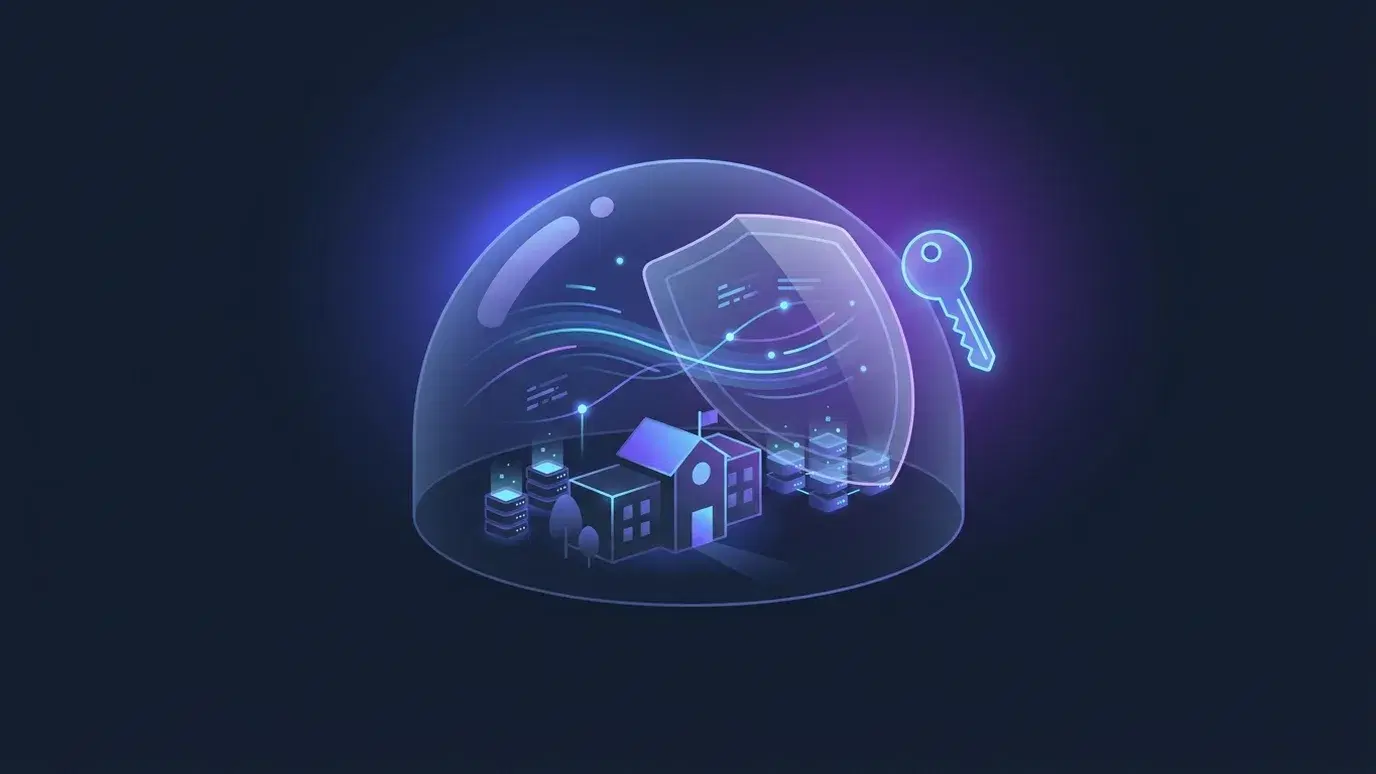
Every conversation about AI in education eventually arrives at the same question: where does our data go? It's the right question. Learner records are among the most protected data categories anywhere — FERPA in the United States, COPPA for children, GDPR in Europe — and 'we send it to an AI provider' is not an answer that survives a diligence review. Privacy-first AI is not a feature checkbox; it's an architecture.
The first pillar is model choice. An education platform should not hard-wire your institution to a single AI vendor. EduGears AI works with multiple providers — OpenAI, Anthropic, Google, and others — so institutions can choose models that match their compliance posture, their region, and their budget. When a better or safer model appears, you switch configuration, not platforms.
The second pillar is BYOK — bring your own key. With BYOK, AI requests run under the institution's own account with the AI provider, on the institution's own data-processing agreement. Your usage, your terms, your audit trail. The platform orchestrates the work, but the AI relationship belongs to you. For districts and universities with negotiated agreements, this converts an impossible procurement conversation into a familiar one.
The third pillar is the training boundary: customer content must never be used to train models. Course materials, learner submissions, and grades are working data, not training corpus. This needs to be an explicit contractual commitment, and it's why 'what happens to our prompts?' should be answered in writing, not in a sales call.
The fourth pillar is isolation. In a multi-tenant platform, one organization's data must be architecturally invisible to every other tenant — enforced in the database layer itself, not filtered in application code. Our white-label LMS enforces tenant isolation with database row-level security: a query from one academy physically cannot see another academy's rows. 'Looking separate' is cosmetic; being separate is structural.
Then there's minimization: AI should see what it needs and nothing more. Grading a submission doesn't require a learner's identity; generating a lesson doesn't require a roster. Trimming payloads to the pedagogical content — and purging transient submissions promptly after processing — shrinks the surface area that policies have to defend.
Institutions should also ask what happens around the AI: is traffic encrypted in transit, is stored content encrypted at rest, who inside the vendor can see customer data, and is there a subprocessor list? Mature answers to boring questions are the real trust signal. Certifications and badges summarize; architecture decides.
AI can be transformative for teaching without being reckless with the data teaching produces. The institutions moving fastest on AI right now are not the ones ignoring privacy — they're the ones who found an architecture that lets their privacy office say yes.