The Top Extended Enterprise Learning Management Systems in 2026
作者 EduGears AI Team
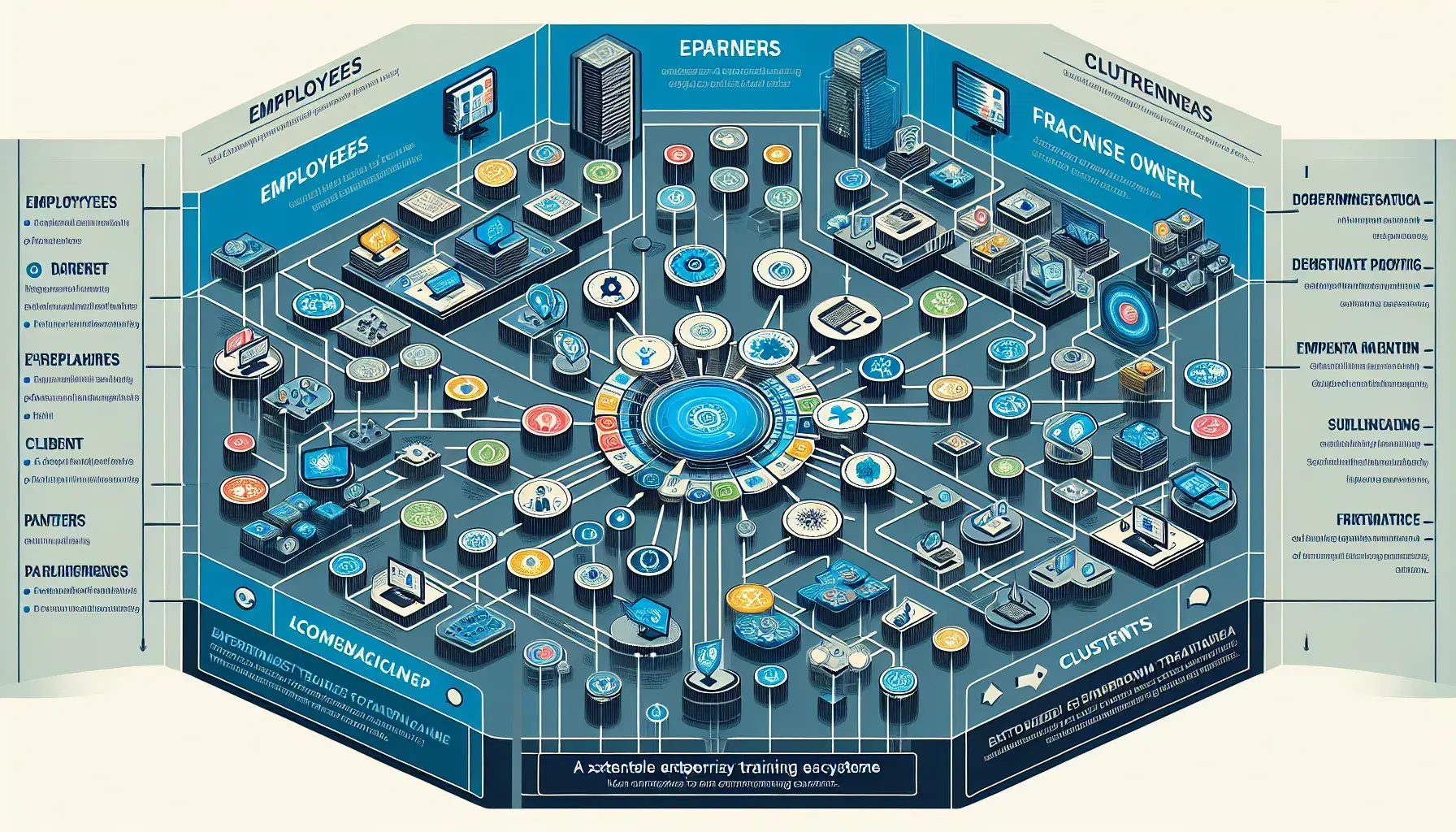
Extended enterprise learning refers to training programs that reach beyond an organization's internal workforce to include external audiences such as customers, channel partners, resellers, franchisees, suppliers, and contractors. This broader training scope creates unique requirements that not every LMS can satisfy. The platform must support multiple distinct audiences with different content, branding, access controls, and reporting needs, all managed from a single administrative interface.
Multi-workspace architecture is the foundation of an effective extended enterprise LMS. EduGears AI supports this through its organization and workspace model, which allows administrators to create separate training environments for different audiences while maintaining centralized oversight. Each workspace can have its own branding, user roles, content library, and enrollment rules. A software company, for example, can operate separate training portals for internal employees, implementation partners, and end-user customers without content or data bleeding between audiences.
Full disclosure before the list: EduGears AI is our own platform, and it appears first below. We've kept every description factual — including the competitors' strengths — because a roundup you can't trust is worth nothing.
EduGears AI — extended enterprise is a natural fit for our family: run partner and customer academies as separately branded tenants on the white-label LMS (each on its own domain), or deliver standard courseware into each partner's own LMS through AI Studio access codes with grades flowing back to you.
Docebo — widely used for extended enterprise, with multi-audience portals, e-commerce, and partner-specific catalogs from one instance.
Absorb LMS — supports multi-tenant style department and audience separation with strong automation, often shortlisted for customer and reseller training.
LearnUpon — built around multiple learning portals from one platform, one for each audience, with straightforward administration.
Thought Industries — focused on external and customer education, with monetization and multi-brand delivery as first-class features.
SAP Litmos — a corporate LMS with broad off-the-shelf content and integrations into the SAP ecosystem, used for both employee and partner training.
Content reuse and customization across audiences is essential for efficiency. An extended enterprise LMS should allow organizations to create core content once and then adapt it for different audiences through selective sharing and permission controls. EduGears AI enables fine-grained content sharing where topics, courses, and assessments can be shared at read, edit, or full access levels with specific users or groups. Time-limited sharing with expiration dates adds another layer of control for seasonal or campaign-based training initiatives.
Scalability is non-negotiable for extended enterprise deployments. Internal training might involve hundreds or thousands of users, but external audiences can easily reach tens of thousands. The LMS must handle this growth without degradation in performance, content delivery, or reporting capability. Bulk user invitation, automated role assignment, and self-registration workflows reduce the administrative burden of onboarding large external populations. EduGears AI supports all of these operations along with custom roles and granular permissions that ensure each user type sees only what is relevant to them.
Certification and compliance tracking take on added importance in extended enterprise contexts. Channel partners may need product certifications to maintain their reseller status. Franchise employees may require compliance training mandated by the parent organization. Customer-facing certifications build product expertise and brand loyalty. EduGears AI automates certificate generation with unique verification IDs and public verification links, creating a credentialing system that is both rigorous and easy to administer across distributed audiences.
Monetization capabilities transform the extended enterprise LMS from a cost center into a revenue generator. Organizations can sell training content to external audiences through custom pricing and subscription models. EduGears AI integrates with Stripe for secure payment processing and provides a billing portal for self-service management. This capability is particularly valuable for organizations that want to offer professional certification programs, premium product training, or partner enablement courses as paid services.
Analytics for extended enterprise learning must provide visibility across all audiences while respecting data boundaries. Administrators need to compare training completion and effectiveness across partner tiers, customer segments, and internal departments. EduGears AI delivers role-based dashboards and exportable reports that support this multi-audience analysis. The ability to drill down from organization-wide metrics to individual learner performance ensures that training investments are delivering results across every audience the organization serves.