Top Microlearning LMS Software for Corporate Training in 2026
By EduGears AI Team
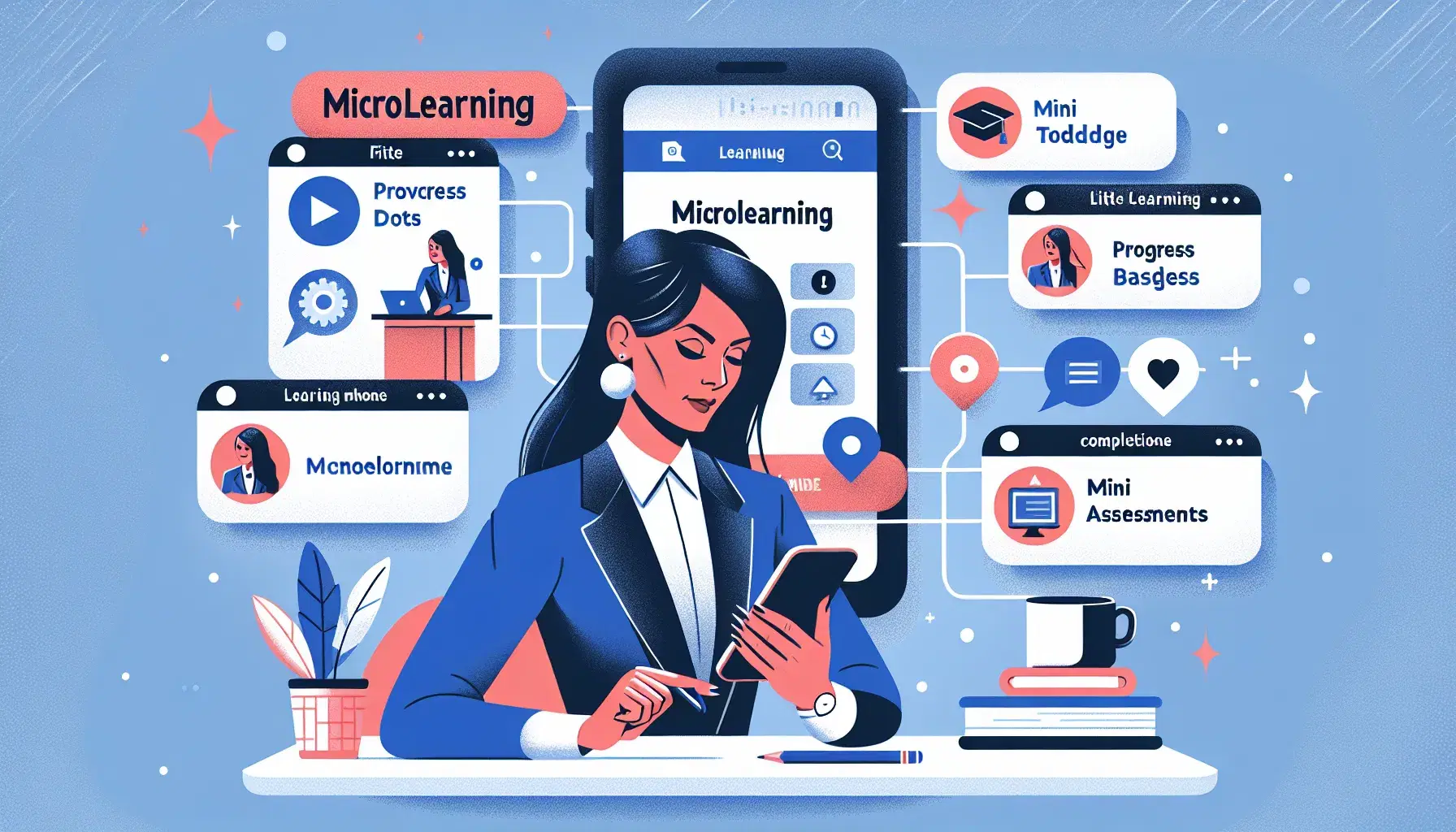
Microlearning has emerged as one of the most effective approaches to corporate training, delivering content in focused, concise modules that typically take five to fifteen minutes to complete. Research consistently shows that shorter learning sessions improve knowledge retention, reduce cognitive overload, and fit naturally into the workflow of busy professionals. For corporate training teams, microlearning also means faster content development cycles and easier maintenance of training libraries. The challenge has been creating enough high-quality microlearning content to cover comprehensive training programs, and AI is solving that challenge.
The core principle of microlearning is that each module should address a single learning objective with clarity and focus. Rather than hour-long courses that cover broad topics, microlearning breaks content into precise, actionable units. An employee learning about data privacy, for example, might complete separate microlearning modules on password policies, data classification, email security, and incident reporting, each with its own assessment to verify understanding. This modular approach allows learners to target specific knowledge gaps rather than sitting through content they already know.
AI-powered content creation makes microlearning scalable in ways that manual development cannot match. With EduGears AI, training teams can generate individual lessons, focused slide decks, concise study guides, and targeted assessments from topic descriptions or existing documents. What previously required an instructional designer to spend hours distilling a broad topic into focused modules can now be accomplished by specifying the learning objective and letting AI generate the content. This efficiency means organizations can build comprehensive microlearning libraries that cover hundreds of topics without a proportional increase in development resources.
Assessment is integral to effective microlearning because the brevity of each module demands efficient knowledge verification. AI question generation produces focused question sets that match the scope and difficulty of each microlearning unit. Quick quizzes of three to five questions immediately after content consumption reinforce learning through retrieval practice, one of the most evidence-supported techniques for long-term retention. AI grading provides instant feedback, allowing learners to identify and address misunderstandings before moving to the next module.
Mobile accessibility and flexible scheduling are essential for microlearning in corporate environments. Employees may complete a module during a commute, between meetings, or during a break. The LMS must deliver a seamless experience across devices with progress synchronization that allows learners to start on one device and continue on another. EduGears AI provides a responsive platform experience that supports this anytime-anywhere learning pattern, and its AI tutor is available for on-demand support when learners have questions about microlearning content.
Learning path construction transforms standalone microlearning modules into cohesive development programs. While individual modules are valuable for just-in-time learning, structured sequences of modules create progressive skill-building journeys. EduGears AI supports learning paths with prerequisite relationships, milestone assessments, and certificate generation upon path completion. This means microlearning can serve both immediate performance support needs and longer-term professional development goals within the same platform.
For corporate training teams evaluating microlearning LMS platforms, the key criteria are content creation efficiency, assessment integration, mobile experience, and analytics granularity. The platform should make it easy to create, update, and retire microlearning modules at the pace business needs demand. EduGears AI meets these criteria through its AI-powered content generation, automated assessment and grading, responsive design, and detailed analytics that track engagement and knowledge retention at the individual module level. This combination enables organizations to implement microlearning strategies that are comprehensive, measurable, and sustainable.