AI Tutors vs Traditional Tutoring: What the Research Shows
By EduGears AI Team
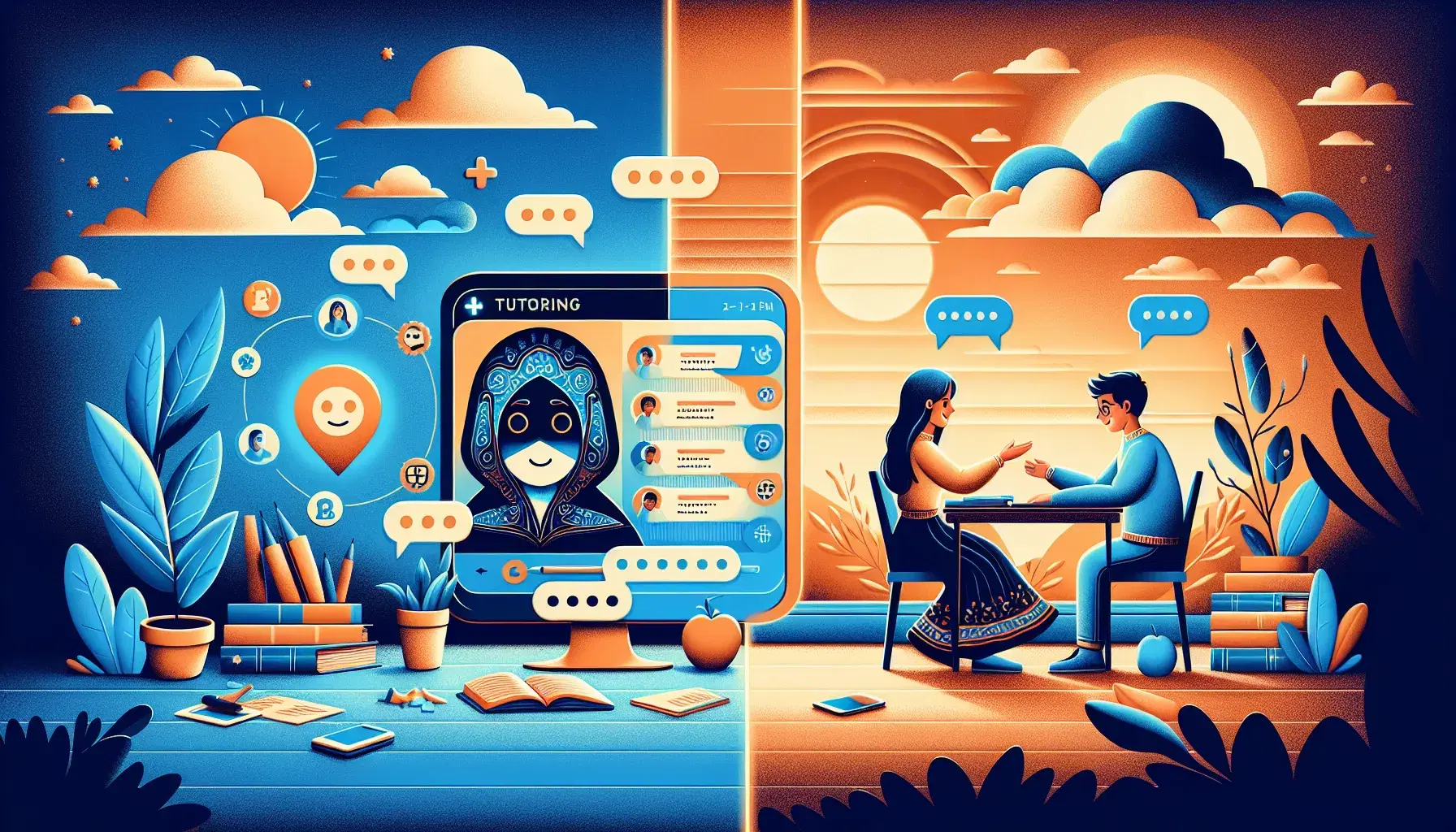
The question of whether AI tutoring can match or complement traditional human tutoring has become one of the most actively discussed topics in education technology. Research on this subject is still evolving, but early findings suggest that AI tutors excel in specific areas while human tutors retain advantages in others. Understanding these distinctions helps educators and organizations make informed decisions about how to deploy tutoring resources most effectively.
Accessibility and availability represent the most clear-cut advantage of AI tutoring. Human tutors are constrained by geography, scheduling, and cost. A student who needs help at 11 PM before an exam or an employee working through a training module over the weekend cannot access a human tutor on demand. AI tutors like those built into EduGears AI are available around the clock, respond instantly, and can serve an unlimited number of learners simultaneously. This removes the access barrier that has historically made tutoring a privilege rather than a universal resource.
Consistency of quality is another area where AI tutoring shows strength. Human tutors vary widely in expertise, teaching skill, and patience. An AI tutor delivers the same quality of explanation every time, drawing on the full scope of the course content to provide contextually relevant responses. It does not have bad days, does not rush through explanations when tired, and does not vary its approach based on unconscious biases about student capability. For organizations that need to ensure consistent support quality across large learner populations, this reliability is significant.
Research into learning outcomes suggests that AI tutoring is most effective for well-defined domains where questions have clear answers and explanations can be structured logically. Mathematics, science, language learning, compliance training, and technical skill development all fall into this category. In these domains, studies have shown that students who use AI tutoring alongside traditional instruction perform comparably to or better than those relying solely on classroom teaching without supplementary support.
Human tutoring retains advantages in areas that require emotional intelligence, motivational coaching, and the ability to recognize and respond to non-verbal cues. A human tutor can detect when a student is frustrated, anxious, or disengaged and adjust their approach accordingly. They can draw on shared experiences, provide mentorship that extends beyond academic content, and build relationships that encourage sustained effort. These interpersonal dimensions of tutoring are difficult for current AI systems to replicate.
The emerging consensus among educators is that the most effective approach combines both AI and human tutoring, using each where it has the greatest impact. AI handles the volume of routine questions, practice problems, and concept explanations that students need on a daily basis, freeing human tutors to focus on complex problem-solving, emotional support, and higher-order thinking discussions. EduGears AI supports this blended approach by providing AI tutoring within the course context while making it easy for instructors to monitor conversations and step in when more nuanced guidance is needed.
Cost considerations further reinforce the case for a blended model. Private tutoring can cost $40 to $100 or more per hour, making it inaccessible to many students and prohibitively expensive for organizations to provide at scale. AI tutoring, included as part of an LMS subscription, provides a baseline of personalized support at a fraction of the cost. Organizations can then invest their human tutoring budget where it matters most: complex cases, struggling learners, and high-stakes preparation scenarios.
As AI tutoring technology continues to improve, the capabilities gap between AI and human tutors will narrow in many domains. Multimodal interaction through text and voice, improved contextual understanding, and better conversation management are all active areas of development. Organizations that integrate AI tutoring into their learning ecosystems today will be well-positioned to benefit from these improvements as they arrive, creating a continuously improving support system for their learners.